Posts

Protein in the urine: what's the big deal and why it needs to be treated?

Image
Protein in the urine is medically referred to as "proteinuria". As we had discussed earlier, abnormally high amount of protein in the urine is one of the hallmarks of Chronic Kidney Disease (CKD). We also talked about the role of moderate protein diet in preventing CKD progression . But if protein in the urine is just another downstream effect of kidney disease, then why do we nephrologists make so much fuss about treating it?


Kidney disease and heart disease: five questions to unravel the link

Image
A frequent conundrum that I see patients run into almost everyday, is understanding the link between chronic kidney disease (CKD) and coronary heart disease (CHD). They are surprised when I tell them that most CKD patients are more likely to die from heart disease, than from kidney disease (or require renal replacement therapy/dialysis). Why is that so, and is there a link between kidney and heart disease? Lets explore.

What is the right amount of daily protein that a patient with kidney disease needs to eat?

Image
Earlier, I had talked about the recommended dietary guidelines for patients who have kidney disease . I want to tackle the issue of protein intake in patients with chronic kidney disease (CKD) in a little more detail today because this is an issue that patients seem to be the most confused about. The question is not just limited to how much protein you need to eat to for your kidneys' health and your overall health. What also needs to be realized is that not all sources of protein are created equal, even if they have the same amount of protein. Quality hence matters as much as quantity. 

Polycystic kidney disease, and future drugs that might treat it

Image
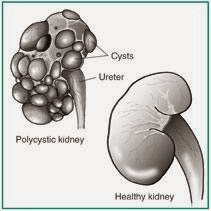
Earlier, we had talked about kidney cysts , and how they could be present in different disease conditions of varying severity. Lets talk a little about one specific entity characterized by multiple cysts in the kidney, called Polycystic Kidney Disease (PKD), and some potential treatment options that might pan out in the future.  

Treatment Options for Kidney Failure: From Transplantation to Dialysis to Conservative Management...in 10 minutes!

Image
After I wrote my last post on the treatment options that patients with advanced kidney disease and kidney failure  have when it comes to managing their disease, I came across a really nice 10 minute long video on YouTube that pretty much summarizes everything that I wrote in that article. The video goes into options that patients with kidney disease will typically have- dialysis being the most common one, transplantation, and finally not doing anything aggressive and treating it conservatively (I have written on conservative management and what happens when patients refuse dialysis here ).  The video also covers questions like when to start dialysis, and the decision making that goes in to deciding who would make a good candidate for home dialysis. All in all, it is a great way in which kidney disease patients and their loved ones can educate themselves. The format is engaging and you won't have to read pages of text that many patients find boring!  The video...

Sugar Consumption and Chronic Disease: A Brief History of the CardioRenal Epidemic

Image
One-third of adults in the US are obese. One-third of adults in the US have hypertension. A little under 10% have diabetes. It wasn't always like this. Not till the very recent past . And I am talking about the early 1900s. What happened to you America? Sugar may be a big part of the answer to the above question (if not the complete answer). In huge amounts. Cheap and omnipresent. To understand the effects of sugar consumption on health and kidney disease, lets take an interesting detour in to the history of sugar consumption. Once one understands  how sugar's (over)use has grown in parallel with the increasing incidences of heart and kidney disease, diabetes, etc since the eighteenth century, the link between sugar consumption and adverse health consequences becomes clearer.

What Kind of Dialysis is the "Best"? Which Dialysis Modality should I chose if I have Impending Kidney Failure?

Image
We are years, if not decades away from creating an artificial kidney . Until then, in an ideal world, every patient with advanced stage-5 kidney disease who needs kidney replacement therapy would get a kidney transplant. Unfortunately, kidneys are a scarce and limited resource. The number of people with kidney failure who could use a transplant far outweighs the number of transplants that actually occur every year. As per the latest USRDS Annual Data Report (2013) , 17,671 kidney transplants were performed in the United States in 2011 (111 fewer than in 2010). Meanwhile, the waiting list had 90,474 patients in line, as of December 31st of the same year. As you can see, the active waiting list is more than three times larger than the actual supply of donor kidneys. In the light of this stark mismatch, desperate patients have to make a decision about the next best option, dialysis. And the question that any proactive patient will ask, and should ask, is what kind of dialysis is the ...